Holiday schedule templates help people plan vacations, office holidays, school breaks, and family events in an organized way. Many companies, schools, and businesses use these templates to manage holidays and work schedules without confusion. A good holiday schedule template saves time, improves communication, and keeps everyone informed about important dates. People often struggle to manage holidays because they forget dates, miss deadlines, or create overlapping plans. A holiday schedule template solves these problems by giving a clear structure for planning. It helps employees know their leave dates, students remember school breaks, and families organize travel plans.
A holiday schedule template usually includes holiday names, dates, working days, leave details, and special events. Some templates also include notes, reminders, and approval sections. People can create these templates in spreadsheets, calendars, or printable documents. Workers can put up holiday calendars early so that they make good schedules of their working and free hours. Customers benefit by knowing when services might be down.
Components of Holiday Schedule
List of Holidays
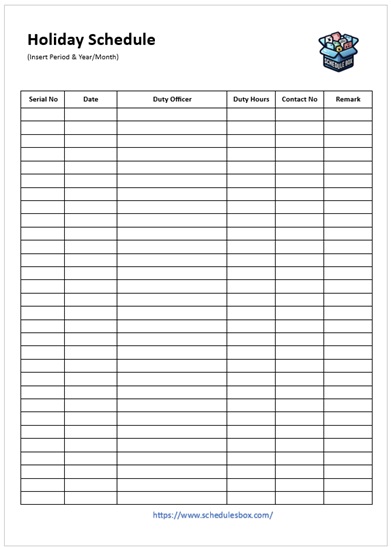
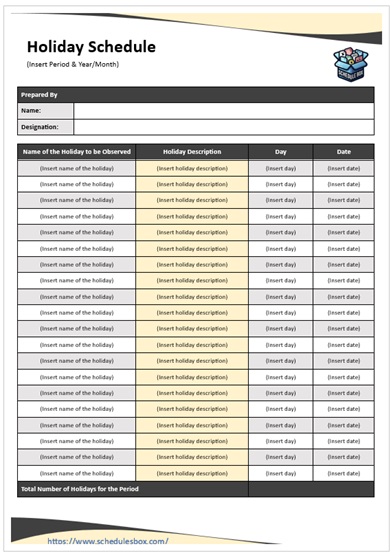
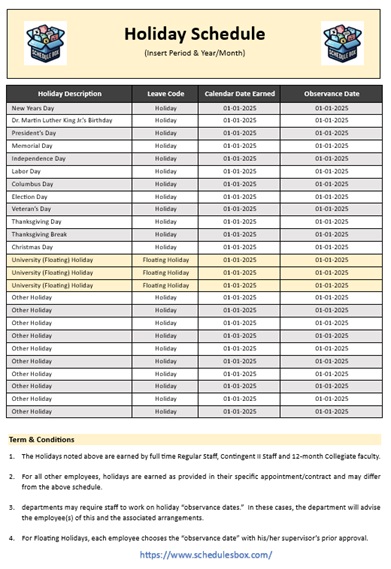
A holiday schedule should begin with a complete list of holidays observed by the company. This section helps employees understand when the office will remain closed or when the business will operate for shorter hours. Companies should include all national holidays, regional holidays, and local celebrations that apply to the area where the business operates. Businesses should also mention special company holidays such as foundation day celebrations, annual retreats, or employee appreciation days. A clear holiday list reduces confusion and helps employees plan personal activities, vacations, and family events in advance. Every holiday should appear in an organized format so employees can quickly review important dates. Companies that operate in multiple locations should prepare separate holiday lists for each branch because different areas may celebrate different holidays. A complete holiday list also supports smooth workflow management because managers can prepare staffing schedules before busy seasons begin.
Dates and Days
The holiday schedule should clearly mention the exact date and day of every holiday. Employees rely on this information to organize work assignments, travel plans, and personal commitments. Some holidays occur on fixed dates every year, while others change annually based on religious calendars or national traditions. For example, Thanksgiving in the United States falls on a different Thursday every year, and Easter changes according to the lunar calendar. Employees need accurate dates to avoid missing deadlines or work responsibilities. Listing the day of the week beside each holiday improves planning because workers can identify long weekends and possible schedule adjustments quickly. Companies should double-check all dates before publishing the schedule because incorrect information may create confusion and operational problems. Accurate holiday dates also help departments coordinate meetings, project timelines, and customer service activities more effectively throughout the year.
Hours of Operation
A detailed holiday schedule should explain any changes in business operating hours during holidays. Some companies completely close during holidays, while others continue operations with reduced working hours. Employees and customers both benefit from knowing these schedule adjustments early. For example, a retail store may close earlier on Christmas Eve, or a customer support office may operate only half a day during national celebrations. Clear operating hours help employees prepare work tasks and avoid misunderstandings about attendance requirements. Businesses that provide emergency or essential services should also explain shift arrangements for employees working during holidays. Companies should present holiday hours in a simple format so employees can easily understand opening and closing times. Managers can also use this section to inform employees about break schedules, overtime shifts, and temporary department closures. Proper communication about holiday hours supports smooth business operations and improves customer satisfaction during festive periods.
Policy Details
The policy details section explains company rules regarding holiday pay, overtime, attendance requirements, and employee eligibility for holiday work. This section plays an important role in industries such as healthcare, hospitality, transportation, and retail because these sectors often continue operations during public holidays. Employees should clearly understand whether they will receive extra pay for holiday shifts or overtime work. Companies should also explain conditions for paid holidays, substitute leave, and compensation policies for workers required to remain on duty. Clear holiday policies help prevent disputes and improve fairness in the workplace. Employees feel more confident when they understand company expectations and benefits related to holiday schedules. Businesses should also mention procedures for requesting leave during holiday periods because many employees prefer vacations around national celebrations. A transparent policy section creates trust between employers and staff while supporting better workforce management throughout the year.
Year
Every holiday schedule must clearly mention the year because holiday dates often change from one year to another. A schedule without a year may create confusion, especially for holidays based on lunar calendars, seasonal events, or government announcements. Employees need the correct yearly schedule to plan vacations, meetings, project deadlines, and family gatherings properly. Companies should place the year at the top of the holiday schedule document so workers can identify the correct calendar immediately. Organizations that prepare schedules in advance should update them every year to reflect new holiday dates and policy changes. Businesses operating internationally may also need separate yearly schedules for different countries because national holidays vary between regions. A clearly labeled year ensures employees, managers, and customers all use accurate information for planning purposes. Regular yearly updates also help businesses remain organized and avoid communication mistakes related to outdated schedules.

Contact Information
A professional holiday schedule should include important contact information for emergencies, urgent work matters, or employee questions during holiday periods. Many offices reduce staff availability during vacations, so employees need to know whom they should contact for assistance. Companies should provide names, phone numbers, email addresses, or department contacts for managers, supervisors, technical support teams, and emergency coordinators. This information becomes especially useful in industries that operate continuously, such as hospitals, customer service centers, security companies, and transportation services. Employees feel more secure when they know support remains available even during holidays. Companies should also identify backup contacts in case primary staff members remain unavailable. Clear contact information improves communication, reduces delays in solving problems, and helps maintain business continuity during holiday periods. A well-organized contact section also demonstrates professionalism and responsibility toward employees and customers.
Distribution and Access
The distribution and access section explains how employees will receive the holiday schedule and where they can find it whenever needed. Businesses should use reliable communication methods to ensure every employee receives updated holiday information on time. Many companies share schedules through email, employee portals, internal communication systems, or workplace applications. Some organizations also place printed copies on notice boards, break rooms, and common office areas for easy access. Clear distribution methods help employees stay informed and reduce misunderstandings about holiday dates or work expectations. Companies should also mention who updates the schedule and how employees will receive notifications about changes or corrections. Easy access to the holiday schedule supports better planning because employees can review information whenever necessary. Organizations with remote workers should provide digital access so staff members can view schedules from different locations. Proper distribution and accessibility improve communication and ensure all employees remain aware of important holiday arrangements throughout the year.
Free Holiday Schedule Templates
Businesses use holiday schedule templates to manage staff availability during busy seasons. Managers can easily check who remains available and who takes leave. This process reduces misunderstandings and helps teams continue work smoothly. Employees also feel more comfortable because they can see approved holidays clearly.
Schools use holiday templates to share academic calendars with students and parents. These templates show vacation periods, exam breaks, and national holidays. Parents can plan family trips and activities after checking the school holiday schedule.
Families also benefit from holiday schedule templates. Parents can organize vacations, shopping plans, and family gatherings without stress. Children enjoy holidays more when families prepare activities in advance. A planned schedule also helps families manage budgets and travel bookings early.
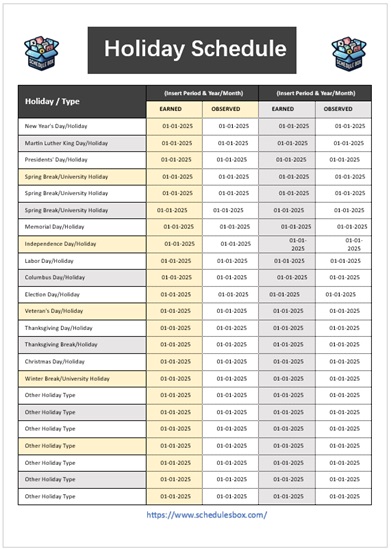
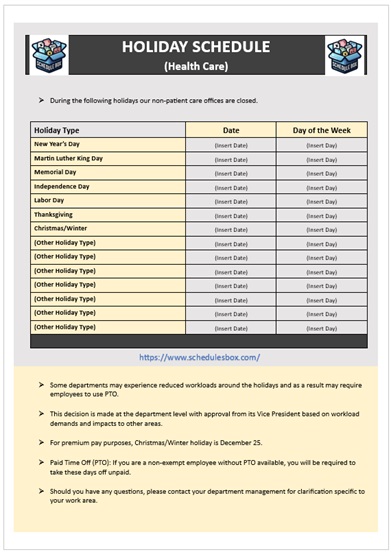
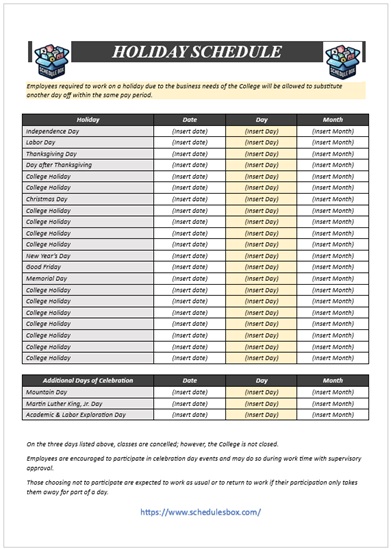
Here is my collection of Free Holiday Schedule Templates that I have created using MS Word to help you out.
Holiday Schedule’s Types
Depending on the nature of a business, where it is situated, and what needs to be done on a regular basis, its vacation policy may differ a lot. Here are some common types of holiday schedules found in various industries and organizations:
Standard Public Holiday Schedule
A standard public holiday schedule includes official holidays recognized by the government of a country or region. These holidays usually apply to all employees and organizations within that area. Common examples include New Year’s Day, Independence Day, Labor Day, Christmas, and other national celebrations. Companies prepare this type of schedule to inform employees about office closures, paid leave, or reduced working hours during public holidays. Government labor laws often regulate these holidays, which means employers must follow official rules regarding employee leave and holiday pay. A standard public holiday schedule helps businesses maintain consistency because every employee receives the same holiday information. Employees also benefit because they can plan vacations, family gatherings, and personal activities in advance. Schools, banks, offices, and government institutions commonly use this type of schedule to coordinate operations and avoid confusion about working days throughout the year.
Rotating Holiday Schedule
A rotating holiday schedule allows organizations to remain operational during public holidays while still giving employees time off. In this system, workers take turns covering shifts during holidays instead of everyone taking leave at the same time. Hospitals, police departments, fire services, power companies, and transportation industries often use rotating schedules because they provide essential services that must continue every day. Managers usually divide employees into teams and assign different holiday shifts fairly across the year. This arrangement prevents staff shortages and keeps important services available to the public during holidays. Employees who work on holidays may receive overtime pay, additional leave, or holiday bonuses depending on company policies. A rotating holiday schedule also reduces employee burnout because work responsibilities spread evenly among team members. Proper planning and communication remain important in this system because employees need enough notice to prepare personal and family plans around their assigned shifts.
Floating Holidays
Floating holidays give employees flexibility to choose additional days off based on their personal, religious, or cultural needs. Unlike fixed public holidays, employees can decide when to use these leave days throughout the year. Companies introduce floating holidays to create a more inclusive workplace because employees from different cultural and religious backgrounds may celebrate different occasions. For example, one employee may choose a floating holiday for a religious festival, while another may use it for a family event or personal celebration. This system supports diversity and employee satisfaction because workers gain more control over their schedules. Managers usually require employees to request floating holidays in advance to ensure proper staffing levels. Floating holidays also improve work-life balance because employees can align leave with events that hold personal importance. Organizations that offer flexible leave options often build stronger employee trust and improve workplace morale.
Restricted Holidays
Restricted holidays provide employees with a list of optional holidays from which they can select a limited number of leave days. Companies commonly use this system in multicultural workplaces where employees celebrate different religious and cultural events. Instead of observing every holiday for all employees, organizations allow workers to choose the holidays most meaningful to them. For example, one employee may select Diwali, while another may choose Eid or Good Friday. This approach creates flexibility while helping businesses maintain regular operations throughout the year. Employees usually inform management about their selected holidays in advance so departments can arrange staffing schedules effectively. Restricted holidays promote respect for cultural diversity and encourage inclusiveness within the workplace. Employees feel valued because the organization recognizes individual beliefs and traditions. This holiday system also helps businesses manage productivity because not all workers take leave on the same days.
Extended Holiday Breaks
Extended holiday breaks occur when organizations close operations for several consecutive days during major holiday periods. Schools often close for summer vacations, winter holidays, or long festive breaks, while some businesses shut down during Christmas or New Year celebrations. Companies may choose this system to reduce operational costs, perform maintenance work, or allow employees to spend quality time with their families. Employees appreciate extended breaks because they provide opportunities for travel, relaxation, and personal activities without work interruptions. Organizations usually announce these schedules early so employees can arrange vacations and complete work tasks before the closure begins. Extended holiday breaks also improve employee well-being because workers return with better energy and motivation after rest periods. However, businesses must plan carefully to avoid delays in customer service, project deadlines, or operational responsibilities after reopening. Clear communication remains essential to ensure employees and customers understand closure dates and reopening schedules.
Staggered Holidays
A staggered holiday schedule allows employees to take vacations at different times instead of all employees taking leave together. Companies use this system to maintain continuous business operations during busy periods or seasonal demand. Manufacturing industries, customer service centers, retail businesses, and IT companies often follow staggered schedules because they cannot afford complete shutdowns during peak work seasons. Managers usually approve employee leave requests based on staffing needs and operational priorities. This arrangement helps businesses continue serving customers while still supporting employee time off. Employees also gain flexibility because they can select vacation periods that match their personal schedules. Staggered holidays reduce pressure on remaining staff because departments avoid sudden labor shortages. Effective planning remains important in this system because managers must balance employee preferences with business requirements. Clear policies and fair leave approval processes help maintain employee satisfaction and prevent workplace conflicts related to holiday scheduling.
Partial Holiday Schedules
A partial holiday schedule applies when businesses reduce working hours during holidays instead of closing completely. Retail stores, restaurants, customer support centers, and entertainment businesses often use this system during festive seasons. Companies may open later, close earlier, or operate with smaller teams during holidays. Employees usually work in shifts to cover adjusted business hours efficiently. This arrangement allows businesses to continue serving customers while giving employees some holiday time. Managers should clearly communicate reduced operating hours and shift schedules to avoid misunderstandings. Employees working during partial holidays may receive overtime pay or additional compensation depending on company policies. Customers also benefit because they can still access important services during holiday periods. Partial holiday schedules help organizations balance business continuity with employee well-being. Proper coordination remains necessary because reduced staffing levels can increase workload pressure if schedules are not managed carefully.
Emergency Services Schedule
An emergency services schedule ensures that essential public services remain fully operational during holidays. Hospitals, ambulance services, fire departments, police stations, and emergency response teams follow this system because communities depend on these services every day of the year. Employees work in rotating shifts to maintain continuous coverage during holidays and weekends. Managers carefully organize schedules to ensure enough trained staff remain available for emergencies at all times. Workers assigned to holiday shifts often receive additional benefits such as overtime pay, holiday allowances, or substitute leave days. Emergency services schedules require strong coordination because staff shortages can affect public safety and healthcare delivery. Employees in these sectors understand the importance of their responsibilities, especially during busy holiday periods when emergencies may increase.
Clear communication, fair rotation systems, and proper staffing plans help organizations maintain reliable emergency services while supporting employee welfare and work-life balance. Organizations make each kind of holiday schedule while bearing in mind the needs of both the organization and its employees in mind; these often reflect specific operational requirements and cultural context.

Pingback: Vacation Schedule Templates — Free Employee Leave Charts