Skip to content
Home » Vacation Schedule Templates

Vacation Schedule Templates

Vacation schedule templates help organizations and individuals manage leave plans in a simple and organized way. These templates provide a clear structure for tracking vacations, holidays, and employee absences throughout the year. Businesses use them to maintain smooth operations while employees enjoy planned time off. Families and schools also use vacation templates to organize trips, activities, and holiday breaks. A proper vacation schedule helps reduce confusion, improves communication, and supports better time management for everyone involved.
Here are our Free Vacation Schedule Templates to help you plan your next Vacation Trip efficiently.

A Vacation Schedule is a timetable that shows when an employee can go on vacation during a given period which is mostly considered a year. This schedule is important because it helps in governing the absence of employees thus ensuring the smooth running of an organization. Here are some key aspects of a vacation schedule:

Planning and Coordination

Planning and coordination form one of the most important parts of vacation scheduling in any organization. Managers must organize employee vacation requests carefully so the company can continue operating smoothly during holiday periods. Every department needs enough employees available to complete daily tasks and handle customer needs. If too many workers take leave at the same time, the organization may face delays, lower productivity, or customer service problems. Because of this, managers often review vacation requests early and balance employee preferences with business requirements.

Good coordination also helps employees feel more comfortable about taking time off. Team members can discuss vacation plans together and avoid selecting overlapping dates whenever possible. Managers may prepare backup staffing plans or assign temporary replacements before employees begin leave. This organized process reduces stress for both workers and supervisors. Proper planning also allows businesses to manage busy seasons effectively, especially in industries such as retail, healthcare, hospitality, and customer support where employee availability remains very important throughout the year.

Fairness and Transparency

Fairness and transparency help create trust and satisfaction in the workplace when vacation schedules are prepared. Employees want equal opportunities to take leave during popular holiday periods such as summer vacations, Eid, Christmas, or New Year celebrations. Organizations usually create vacation schedules in a fair way so every worker gets a reasonable chance to enjoy preferred vacation dates. Managers may consider factors such as seniority, department requirements, previous vacation history, or urgent personal situations when approving leave requests.

Transparent scheduling means employees clearly understand how decisions are made. Companies should explain the rules and approval process openly so workers know why some requests receive approval while others may require changes. Clear communication prevents misunderstandings and reduces workplace conflicts related to vacation planning. Employees feel more respected and valued when organizations follow fair scheduling practices. A transparent system also improves teamwork because employees trust that everyone receives equal treatment according to company policies and operational needs.

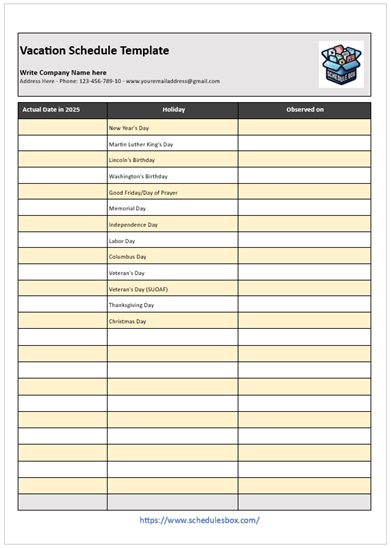
Official Vacation Schedule Template

Official Vacation Schedule Template


File Type: MS Word (ZIP File)
File Size: 64 KB

Download Now

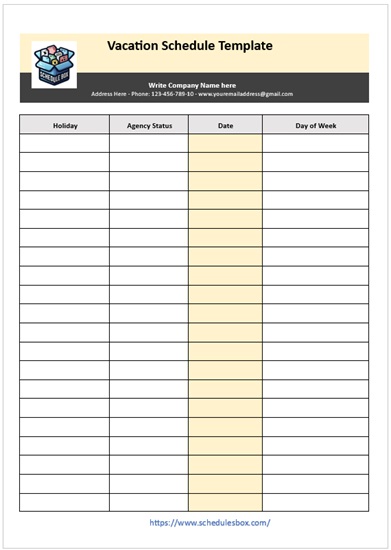
Vacation Schedule Template - Agency Plan

Vacation Schedule Template – Agency Plan


File Type: MS Word (ZIP File)
File Size: 63 KB

Download Now

Clear Policies

Clear vacation policies help organizations manage employee leave in an organized and professional manner. These policies explain how employees should request vacation time, how early requests must be submitted, and what conditions apply during busy work periods. Many companies require workers to submit leave requests several weeks or months before the planned vacation date. Early requests help managers prepare staffing schedules and avoid sudden shortages.

Vacation policies also explain what happens when multiple employees request leave for the same dates. Some organizations approve requests based on submission order, while others may consider seniority or department priorities. Companies often restrict vacations during peak business seasons because they need full staffing to handle increased workloads. Clear policies reduce confusion because employees understand the company’s expectations and limitations before applying for leave. Well-defined rules also support fairness because all employees follow the same procedures and approval system.

Communication

Communication plays a major role in successful vacation scheduling. Employees need timely updates about whether their leave requests have received approval, rejection, or modification. Quick communication allows workers to finalize travel bookings, family plans, and personal arrangements without uncertainty. Managers should also inform teams about staffing adjustments, replacement schedules, and workload changes during employee absences.

Organizations often use emails, meetings, employee portals, or scheduling systems to share vacation information. Good communication helps prevent misunderstandings and keeps everyone aware of important scheduling decisions. Employees feel more confident when they receive regular updates about their requests and workplace schedules. Clear communication also improves teamwork because employees can prepare for coworkers’ absences and adjust responsibilities accordingly. During busy periods, strong communication becomes even more important because businesses must coordinate multiple schedules while maintaining daily operations smoothly.

Software and Tools

Many organizations now use scheduling software and human resource management systems to handle vacation planning more efficiently. These digital tools help managers track employee leave balances, approve requests, monitor staffing levels, and update schedules automatically. Employees can submit vacation requests online, check approval status, and view team schedules from computers or mobile devices. This process saves time and reduces paperwork for both workers and management.

Vacation scheduling software also improves transparency because employees can easily see available dates and department coverage. Automated systems reduce errors in leave calculations and help organizations maintain accurate records. Some advanced tools send reminders, notifications, and alerts about upcoming vacations or scheduling conflicts. Businesses benefit because managers can quickly identify staffing gaps and prepare backup plans when necessary. Digital scheduling systems support better organization, faster communication, and smoother workplace operations, especially in companies with large teams or multiple departments.

A properly managed vacation arrangement makes sure the business remains efficient by maintaining a manageable workload, and at the same time considers the personal time and good health of employees, making it a win-win situation.

Free Vacation Schedule Templates

Vacation schedule templates play an important role in workplace organization and personal planning. They help managers avoid scheduling conflicts by ensuring that too many employees do not take leave at the same time. Employees also benefit because they can plan vacations early and receive approvals without delays. Organized scheduling improves productivity because departments continue functioning properly even during holiday periods. Vacation templates also support fairness since every employee follows the same leave request process and policies.

Vacation Schedule Template - Basic Plan

Vacation Schedule Template – Basic Plan


File Type: MS Word (ZIP File)
File Size: 63 KB

Download Now

Vacation Schedule Template - Employee Record

Vacation Schedule Template – Employee Record


File Type: MS Word (ZIP File)
File Size: 68 KB

Download Now

Types of Vacation Schedules

In view of their size, industry, or peculiar operational demands, there are different types of vacation schedules that organizations use. Here are some common types:

Fixed Vacation Schedules

Set Periods

Fixed vacation schedules refer to planned periods during the year when the entire organization or a large group of employees takes leave together. Many companies choose this system during end-of-year holidays, national festivals, factory maintenance periods, or seasonal shutdowns. Manufacturing industries, educational institutions, and construction companies often use fixed schedules because operations slow down during certain times of the year. During these planned closures, businesses can complete maintenance work, system upgrades, cleaning tasks, or inventory checks without disturbing regular operations.

Employees benefit from fixed vacation periods because they can plan travel, family gatherings, and personal activities far in advance. Managers also find this system easier because they do not need to handle individual leave requests for the same period repeatedly. Fixed schedules reduce scheduling conflicts and ensure equal vacation opportunities for all workers. However, organizations must communicate these dates clearly at the beginning of the year so employees can organize their plans properly. Companies that use fixed schedules usually prepare backup arrangements for emergency services or urgent customer support during closure periods.

Rotating Schedules

Rotating vacation schedules allow employees to take leave at different times while the organization continues operating normally. Industries such as healthcare, law enforcement, transportation, energy services, and hospitality commonly use this system because they must remain active throughout the year. Managers create rotating schedules by dividing employees into groups and assigning vacation periods carefully so enough workers remain available for daily operations.

This scheduling method supports business continuity because departments avoid staff shortages during busy periods. Employees also receive fair opportunities to select vacation dates while managers balance operational requirements. Rotating schedules often work together with shift systems, especially in hospitals and emergency services where workers already follow changing duty hours. Good planning remains important because managers must monitor employee availability, replacement staff, and workload distribution. Organizations that use rotating schedules usually maintain detailed calendars and communication systems to avoid confusion about approved leave dates and staffing coverage.

Flexible Vacation Schedules

Floating Holidays

Floating holidays provide employees with flexibility to choose vacation days based on their personal, cultural, or religious preferences. Instead of following only fixed public holidays, employees can select additional leave days that matter most to them. This system supports diversity because workers from different backgrounds may celebrate different festivals and traditions. For example, one employee may choose a religious festival, while another may use a floating holiday for a family event or personal celebration.

Employees usually need approval before using floating holidays because managers must ensure proper staffing levels during work periods. Companies often encourage workers to submit requests early so scheduling conflicts can be avoided. Floating holidays improve employee satisfaction because workers gain more control over their work-life balance. This system also helps organizations create a more inclusive and supportive workplace culture where employees feel respected and valued.

Unlimited Vacation

Unlimited vacation policies allow employees to take time off whenever necessary as long as they continue meeting performance expectations and complete their responsibilities properly. Technology companies, creative industries, and modern startups often use this approach to create a flexible work environment. Employees coordinate leave plans with managers and coworkers to ensure projects continue smoothly during absences.

This policy focuses more on productivity and results instead of counting exact vacation days. Employees often feel trusted and motivated because they have greater freedom over personal time management. However, organizations still require proper communication and planning to prevent work disruptions. Managers monitor workloads and team coordination carefully so unlimited vacation policies remain fair and balanced. Companies that use this system often encourage responsible leave planning and teamwork to maintain productivity while supporting employee well-being.

Earned Vacation Schedules

Accrual Systems

Accrual-based vacation systems allow employees to earn leave gradually based on the number of hours worked or length of service within the organization. Employees collect vacation days over time, and they can use earned leave after receiving management approval. Many companies use accrual systems because they provide a structured and fair method for managing employee benefits.

For example, employees may earn a certain number of vacation hours every month or receive additional leave after completing one year of service. This system encourages long-term commitment because workers often gain more vacation benefits as their experience increases. Human resource departments usually track earned leave balances through payroll or scheduling software to maintain accurate records. Employees appreciate accrual systems because they clearly understand how much vacation time they have available throughout the year.

Seniority-Based Schedules

Priority Based on Tenure

Seniority-based vacation schedules give priority to employees who have worked longer within the organization. In this system, experienced workers often receive earlier access to preferred vacation dates or more flexibility when changing approved leave plans. Many traditional organizations, government offices, and unionized workplaces follow this scheduling method because it rewards employee loyalty and long-term service.

Managers use seniority systems to reduce conflicts during busy vacation periods when many employees request the same dates. Workers who have spent more years in the company may choose holiday periods before newer employees submit requests. This approach creates a structured process for approving leave applications. However, organizations must balance seniority with fairness so newer employees also receive reasonable opportunities for vacations. Clear communication about seniority rules helps employees understand the scheduling process and reduces workplace disagreements.

First Come, First Served

Open Request Systems

First come, first served vacation systems approve leave requests according to the order in which employees submit applications. Workers who request vacation time earlier usually receive priority for their preferred dates. Many organizations use this method because it creates a simple and transparent approval process. Employees understand that early planning increases their chances of receiving approval during popular holiday periods.

This system encourages workers to organize vacations well in advance, especially during summer breaks, festival seasons, or school holidays. Managers still monitor staffing levels carefully to ensure enough employees remain available for operations. In some cases, companies may reject or adjust requests if too many workers apply for the same dates. Proper communication remains important because employees need updates about available vacation periods and approval decisions quickly.

Mandatory Vacation

Required Time Off

Mandatory vacation policies require employees to take leave for a certain number of consecutive days each year. Financial institutions, high-security organizations, government agencies, and technology companies often use this system to improve security and reduce operational risks. During mandatory leave periods, another employee temporarily handles the absent worker’s responsibilities. This process helps organizations identify unusual activities, errors, or possible fraud that may remain hidden when one person continuously controls important tasks.

Mandatory vacations also support employee health and mental well-being by encouraging workers to rest and recharge. Employees in stressful roles often delay vacations because of heavy workloads or responsibilities. Required leave policies help prevent burnout and improve long-term productivity. Managers usually plan these schedules carefully to maintain business continuity while employees remain away from work. Clear planning and communication help organizations implement mandatory vacation systems successfully without disrupting operations.

The choice is often the result of finding the right balance between organizational needs and employees’ preferences and welfare, as every schedule type offers benefits and challenges.

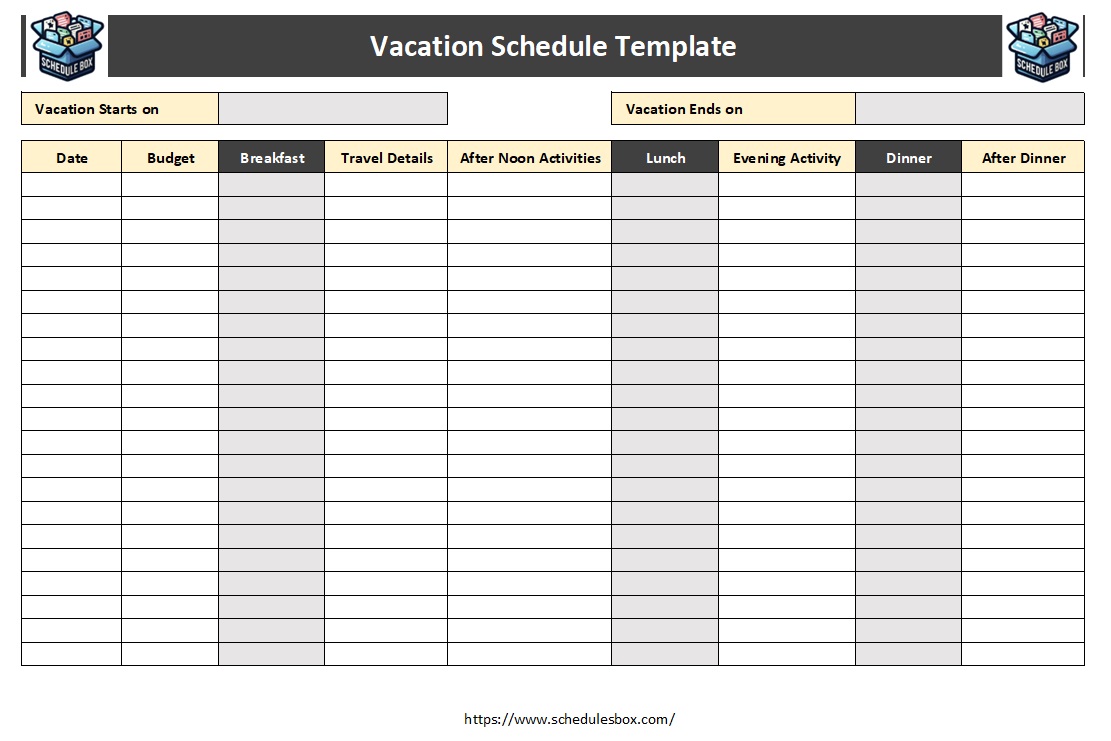
Vacation Schedule Template - Meal Plan

Vacation Schedule Template – Meal Plan


File Type: MS Excel (ZIP File)
File Size: 53 KB

Download Now

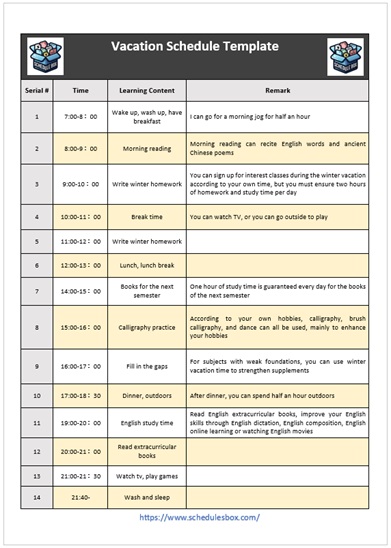
Vacation Schedule Template - Student Plan

Vacation Schedule Template – Student Plan


File Type: MS Word (ZIP File)
File Size: 61 KB

Download Now


Benefits of using our Vacation Schedule Templates

Organizations looking to streamline the process of managing employee vacations will find ready-made vacation schedule templates very useful. Here are some of the main advantages:

Time Management

Vacation schedule templates save a large amount of time for managers and human resource teams because they provide ready-made structures for organizing employee leave. Instead of creating a new schedule from the beginning every time, managers can simply fill in employee names, vacation dates, departments, and approval details. This process speeds up vacation planning and reduces repetitive administrative work. Small businesses and start-ups especially benefit from templates because they often have limited staff and resources for handling scheduling tasks. Templates also allow managers to update information quickly whenever changes occur. Employees can submit requests faster because the format already contains all required sections and instructions. This organized system improves efficiency and helps businesses focus more on operations rather than paperwork.

Consistency

Using the same vacation schedule template across the organization creates consistency in the way leave requests and approvals are managed. Every department follows the same format, rules, and procedures, which helps employees clearly understand the vacation process. Consistent scheduling reduces confusion because everyone receives the same information and follows the same guidelines. Managers can also compare schedules more easily between departments because all records appear in a similar structure. Consistency supports fairness in leave management since policies apply equally to all employees. Workers feel more confident when they know the company handles vacation requests through a uniform process. Standardized templates also reduce the possibility of missing information or misunderstandings related to leave approvals and employee availability.

Improved Planning

Vacation schedule templates improve planning by giving managers and employees a clear view of who will remain available during different periods of the year. Visual schedules make it easier to identify staffing shortages, overlapping vacations, or busy seasons that require extra employees. Managers can prepare replacement staff, adjust workloads, and organize projects more effectively when they can see vacation plans in advance. Proper planning also prevents situations where too many employees take leave at the same time. Businesses can maintain productivity and customer service standards more successfully through organized scheduling. Employees also benefit because they can coordinate vacation plans with coworkers and avoid conflicts over popular holiday periods.

Legal and Policy Compliance

Vacation schedule templates help organizations follow labor laws and internal company policies related to employee leave. Businesses can customize templates according to regional regulations regarding paid vacation days, overtime rules, public holidays, and leave entitlements. This structured system helps managers ensure that employees receive the correct amount of vacation time and that the company follows legal requirements properly. Templates also support policy consistency because all employees follow the same leave request procedures and approval guidelines. Human resource departments can track vacation records more accurately and maintain proper documentation for legal purposes. Compliance with labor laws protects both the organization and employees from misunderstandings, disputes, or policy violations.

Scalability

As companies grow, vacation scheduling becomes more complex because organizations must manage larger teams, multiple departments, and different work locations. Vacation schedule templates support scalability because managers can easily expand and modify them according to business needs. Companies can add new employees, departments, or scheduling categories without creating completely new systems. Flexible templates allow organizations to handle more complicated scheduling situations while maintaining organization and clarity. Growing businesses especially benefit from scalable templates because they can continue using the same scheduling structure even as operations expand. This adaptability saves time, reduces administrative pressure, and supports efficient workforce management during company growth.

Leave a Reply

Your email address will not be published. Required fields are marked *