Skip to content
Home » Course Schedule Templates

Course Schedule Templates

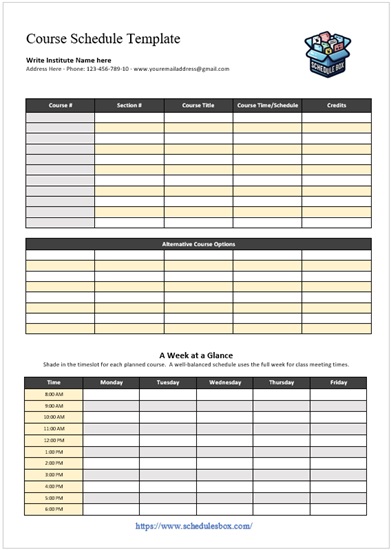
Course schedule templates help teachers, students, and educational institutions organize classes, assignments, exams, and learning activities in a clear and simple way. A course schedule template shows the complete plan of a course, including topics, dates, deadlines, and class timings. Teachers use these templates to manage lessons properly and cover all important subjects on time. Students also benefit from course schedule templates because they can understand the course structure and prepare for upcoming tasks without confusion. A well-designed template creates discipline, improves communication, and saves time for everyone involved in the learning process.

Course schedule templates come in many formats, such as weekly schedules, monthly planners, semester plans, and digital calendars. Schools, colleges, universities, and online learning platforms use these templates to maintain smooth academic activities. Teachers can easily update lessons and add important information when needed. Students can track their progress and stay focused on their studies. These templates also reduce stress because they provide a clear overview of academic responsibilities. Simple and organized schedules create a better learning environment and support effective time management.

Course schedule templates play an important role in academic success because they help people manage time and tasks efficiently. Teachers can plan lectures, assignments, quizzes, and exams in advance, which helps them maintain consistency throughout the course. Students can follow the schedule step by step and avoid missing deadlines or important classes. Clear schedules improve punctuality, increase productivity, and encourage better study habits.

These templates also improve communication between teachers and students. Everyone receives the same information about class activities, submission dates, and learning goals. This clarity reduces misunderstandings and creates a more organized educational system. Course schedule templates also help institutions maintain proper academic records and ensure that all subjects receive enough teaching time.

Contents

A detailed plan, known as a course schedule, outlines classes or sessions that will form part of an educational program or course in that particular period of time. It typically includes information such as:

Course Titles

Course titles describe the subjects offered in an academic program. They help students understand the main focus and content of each course. Clear and simple titles make course selection easier and support better academic planning.

Instructor Names

Instructor names identify the teachers or professors responsible for each course. Students can know who will guide lectures, assignments, and class activities. This information also helps students communicate with instructors more effectively.

Class Times

Class times show the exact days and hours for each lesson. They help students organize their daily routines and manage study schedules properly. Clear timing also reduces confusion and supports punctual attendance.

Locations

Locations specify where classes take place, including classrooms, laboratories, or online platforms. Students can easily find their learning spaces and prepare for physical or virtual sessions. Accurate location details improve convenience and class participation.

Course Codes

Course codes provide unique identifiers for academic subjects. Institutions use these codes to organize courses and maintain academic records efficiently. Students also use course codes during registration and timetable preparation.

Credits

Credits show the academic value and workload of a course. Courses with higher credits usually require more study time and assignments. Students use credit information to balance their semester schedules and meet graduation requirements.

Prerequisites

Prerequisites list the requirements students must complete before joining a course. They ensure students possess the necessary knowledge and skills for advanced learning. Clear prerequisites help students choose suitable courses and avoid academic difficulties.

To students and faculty, it is crucial to have a plan for all the time they will be spending on academic matters to ensure that their academic timetables are not in conflict. Administrative duties like room allocation and enrolment monitoring also rely on timetables.

Course Schedule Template - Assignment Plan

Course Schedule Template – Assignment Plan


File Type: MS Word (ZIP File)
File Size: 69 KB

Download Now

Course Schedule Template - Exams and Assignments

Course Schedule Template – Exams and Assignments


File Type: MS Word (ZIP File)
File Size: 124 KB

Download Now

Course Schedule Template - Fall Spring and Summer

Course Schedule Template – Fall Spring and Summer


File Type: MS Word (ZIP File)
File Size: 94 KB

Download Now

Study Schedule Template - Courses Wise

Study Schedule Template – Courses Wise


File Type: MS Word (ZIP File)
File Size: 69 KB

Download Now

Types of Course Schedules

Depending on the educational institution, the level of study, and the format of courses offered, there might be a great difference in course schedules. Here are some common types of course schedules:

Block Schedule

A block schedule allows classes to meet fewer times during the week, but each session lasts much longer than a traditional class period. Lessons may continue for one to two hours, which gives teachers enough time to explain concepts in detail, conduct discussions, organize group activities, and complete practical work without interruption. Students gain more opportunities to focus on one subject at a time instead of quickly shifting between multiple classes during the day. This type of schedule works well for science labs, project-based learning, workshops, and subjects that require deeper concentration. Students can complete assignments and classroom activities within the same session, which reduces homework pressure and improves understanding.

Traditional Schedule

A traditional schedule follows a fixed routine where classes meet regularly throughout the week for shorter periods, usually between 50 and 90 minutes. Most schools and colleges use this system because it creates consistency and predictability for both students and teachers. Students attend several subjects every day, which helps them stay connected with all courses continuously. Teachers can distribute lessons evenly across the semester and monitor student progress regularly. This schedule supports balanced learning because students revise topics frequently instead of waiting several days between classes. It also helps institutions organize classrooms, faculty duties, and examinations efficiently.

Modular Schedule

A modular schedule divides courses into separate learning units or modules that students complete within a shorter time frame. Each module focuses on a specific topic or skill area, allowing students to study one subject deeply before moving to the next. Modules may last a few weeks or an entire semester depending on the academic program. This structure helps students concentrate fully on one area without distractions from unrelated subjects. Teachers can also design lessons more effectively because they focus on clear learning objectives for each module. Modular schedules suit professional training programs, technical courses, and online learning environments where flexibility and focused study play an important role.

Rotating or Alternating Schedule

A rotating or alternating schedule changes class timings and subject order according to different days or weeks. Instead of following the exact same timetable every day, courses rotate through various periods to create flexibility and balance. This system prevents students from attending difficult subjects at the same time every day and reduces scheduling conflicts between classes, labs, and extracurricular activities. Teachers also benefit because they can use different class periods for activities such as presentations, practical sessions, or assessments. Rotating schedules improve variety in the academic routine and help students manage their workload more effectively throughout the week.

Hybrid Schedule

A hybrid schedule combines online learning with traditional face-to-face classroom instruction. Some lessons take place physically on campus, while others occur through online platforms and digital resources. This system gives students greater flexibility because they can complete part of their coursework from home while still participating in classroom discussions and practical sessions. Teachers can use technology to share lectures, assignments, videos, and quizzes more efficiently. Hybrid schedules support independent learning and help students develop digital communication skills. Educational institutions often use this model to provide flexible learning opportunities and improve access for students from different locations.

Compressed or Intensive Schedule

A compressed or intensive schedule allows students to complete courses within a shorter period than a normal semester. Classes meet more frequently and often last longer each day, which creates a fast-paced learning environment. Summer courses, short certification programs, and professional training sessions commonly use this format. Students can complete academic requirements quickly and focus on fewer subjects at one time. Teachers deliver lessons in concentrated sessions, which encourages strong engagement and consistent participation. This schedule benefits motivated learners who prefer accelerated study and want to finish courses within limited timeframes.

Evening or Weekend Schedule

An evening or weekend schedule serves students who cannot attend classes during regular daytime hours. Working professionals, part-time students, and adult learners often choose this format because it allows them to balance education with jobs, family responsibilities, and personal commitments. Classes usually occur during evenings after work hours or on weekends when students have more free time. Educational institutions use this schedule to provide flexible learning opportunities for non-traditional students. Evening and weekend programs help people continue their education without interrupting their careers or daily responsibilities.

Asynchronous Schedule

An asynchronous schedule allows students to learn without fixed class meeting times. Instructors upload lectures, assignments, discussion materials, and learning resources online, and students access them whenever convenient. This system gives learners complete flexibility to study according to their personal schedules and learning pace. Students can review recorded lectures multiple times, complete coursework independently, and participate in discussions at suitable times. Asynchronous learning works especially well for online education and distance learning programs because it removes time restrictions and supports students from different locations and time zones.

Open Schedule

An open schedule offers the highest level of flexibility in education. Students can begin, progress through, and complete courses at their own pace within a specific timeframe. This system often includes self-directed learning with very few fixed deadlines or meeting requirements. Students gain greater control over their study routines and can spend more time on difficult topics when necessary. Open schedules support independent learners who prefer personalized learning experiences and flexible academic planning. Many online institutions and adult education programs use this format to accommodate diverse student needs and lifestyles.
Different types of schedules support different teaching methods, learning styles, and academic goals. Some schedules focus on structure and consistency, while others emphasize flexibility and independent learning. Educational institutions choose schedule formats according to course requirements, student needs, and available resources. A well-planned schedule improves time management, supports effective learning, and creates a balanced academic experience for both teachers and students.

Course Schedule Template - Lesson Plan

Course Schedule Template – Lesson Plan


File Type: MS Word (ZIP File)
File Size: 101 KB

Download Now

Course Schedule Template - Week at a Glance

Course Schedule Template – Week at a Glance


File Type: MS Word (ZIP File)
File Size: 110 KB

Download Now

Course Schedule Template - Weekly Plan

Course Schedule Template – Weekly Plan


File Type: MS Word (ZIP File)
File Size: 90 KB

Download Now

Critical Importance of Course Schedules

Educational establishments rely deeply on program schedules, and this way of organizing courses deeply affects both lecturers, students, and staff in many ways. Here are some reasons why course schedules are critically important:

Maximizing Resource Utilization: Efficient use of classrooms, laboratories, and other institutions’ resources is the importance of proper scheduling. It ensures that they are not overbooked or underused thus making good use of them for schooling.

Conflict Avoidance: Careful planning of course schedules by educational institutions prevents clashes in class timings that are vital for students as well as faculty hence, making sure that learners do not have to compromise over the classes they want to attend as lecturers effectively juggle between teaching and research tasks.

Academic Success: A course schedule that is organized well helps students to divide their academic responsibilities with school and family personal obligations, making it important to ensure good stress levels and overall fitness. This allows students to prepare for their studies productively hence increasing performance in school.

Strategic Enrollment Management: Managing enrollment effectively is closely dependent on course schedules which make sure there are appropriate number of sections of courses needed by students such that overcrowding is avoided resulting in an optimal student-teacher ratio and better experiences in learning.

Facilitating Completions: Efficient scheduling helps students complete their degrees and certificates on time by allowing them to take necessary classes without delays. This is especially important for programs with courses offered in a sequence or required prerequisites.

Accessibility and Flexibility: For non-traditional students, such as working adults or parents, flexible scheduling (like evening, weekend, or online classes) is essential. It allows these students to continue their education without sacrificing their job or family responsibilities.

Adaptability to Changing Educational Needs: Reacting to evolving educational terrains and preserving academic programs’ competitiveness and relevance demands dynamic scheduling that promptly adjusts to changes, for example, shifts in student demand, new course offerings or faculty availability.

Student Retention: A relevant timetable enables student’s better satisfaction and retention. Most likely students would pursue higher education in institutions whose timetable fits their demands thereby facilitating the easy accomplishment of their educational goals.

Another important benefit involves flexibility and easy planning. Teachers can adjust lessons according to student progress, holidays, or unexpected events without creating confusion. Students can balance studies with personal activities because they know their academic timetable in advance. In online education, course schedule templates become even more valuable because they help learners stay motivated and organized while studying from different locations.

In general, course schedules that are meticulously thought out and carried out are at the heart of the smooth running of educational facilities, student success, and satisfying people working as lecturers. Different scheduling formats provide unique benefits that support various teaching methods, academic goals, and student lifestyles. Some schedules offer structure and routine, while others provide flexibility and independent learning opportunities. By choosing the right schedule type, educational institutions can improve time management, enhance student performance, and create a smoother academic experience for both teachers and learners.


Leave a Reply

Your email address will not be published. Required fields are marked *