Skip to content
Home » Cleaning Schedule Templates

Cleaning Schedule Templates

A cleaning schedule template helps people organize daily, weekly, and monthly cleaning tasks in a simple and structured way. It creates a clear plan that keeps homes, offices, schools, and workplaces neat and hygienic. Many people struggle to manage cleaning duties because they forget tasks or fail to divide responsibilities properly. A well-designed cleaning schedule template solves this problem by listing tasks, assigning duties, and setting deadlines. It also saves time because people follow a prepared routine instead of deciding what to clean each day. Clean environments improve health, increase productivity, and create a comfortable atmosphere for everyone.

Families use cleaning schedules to share household responsibilities fairly, while businesses use them to maintain professional and safe spaces. A cleaning schedule template also reduces stress because organized spaces support better focus and peace of mind. People can customize these templates according to their needs, cleaning frequency, and available time. Whether someone manages a small apartment or a large office, a cleaning schedule template provides structure and consistency.

Its importance continues to grow because modern lifestyles demand better organization, cleanliness, and efficient time management in both personal and professional settings. Without it, things could be a mess and lead to the buildup of dirt. So, to avoid such challenges and improve a healthy environment, using a structured cleaning schedule template has a great deal of value. With this stunning tool, you can easily break down the cleaning tasks into small subtasks and allocate them to the cleaning staff. That is how you can not only enhance living standards but also staff productivity and performance levels a great deal.

Key Components of a Cleaning Schedule

Tasks

Cleaning tasks include all the activities people complete to keep a place neat, fresh, and healthy. These tasks can include dusting furniture, sweeping floors, vacuuming carpets, mopping tiles, washing dishes, sanitizing surfaces, and cleaning bathrooms. Some people also add laundry, trash removal, and organizing shelves to their cleaning routines. Clear task lists help people understand what they need to clean and prevent them from missing important areas. A detailed cleaning task list also helps families, employees, or cleaning teams work in an organized way. When people divide cleaning into small tasks, they can finish work more easily and avoid confusion. Proper cleaning tasks improve hygiene, reduce germs, and create a comfortable environment for everyone.

Frequency

Frequency explains how often people should complete each cleaning task. Some cleaning jobs require daily attention, while others only need weekly or monthly care. For example, people usually wipe kitchen counters, wash dishes, and take out trash every day because these tasks help maintain cleanliness and prevent bad smells. Weekly tasks may include vacuuming carpets, cleaning bathrooms, and changing bed sheets. Monthly tasks can include washing windows, deep cleaning furniture, or organizing storage areas. A proper cleaning frequency keeps spaces clean without creating extra workload. It also helps people build a routine and manage cleaning activities in a balanced and consistent way.

Responsibilities

Responsibilities help people divide cleaning work fairly among family members, employees, or cleaning staff. A cleaning schedule becomes more effective when everyone knows their duties clearly. Parents may assign children simple tasks like organizing toys or wiping tables, while adults may handle heavier cleaning jobs. In workplaces, managers often divide cleaning duties among teams to maintain clean office spaces and shared areas. Clear responsibilities reduce confusion, save time, and encourage teamwork. People feel more responsible when they know which tasks belong to them. This system also prevents one person from carrying all the workload and helps everyone contribute equally to cleanliness and organization.

Areas

A cleaning schedule often divides tasks according to different areas or rooms. Common areas include kitchens, bathrooms, bedrooms, living rooms, offices, hallways, and outdoor spaces. Each area requires different cleaning methods and tools. Kitchens need regular surface cleaning and dishwashing, while bathrooms require sanitizing and deep cleaning to remove germs. Bedrooms often need dusting, organizing, and changing bed sheets. Dividing cleaning tasks by area helps people focus better and clean every space properly. This method also prevents people from forgetting less-used areas such as storage rooms or balconies. Organized area-based cleaning creates a cleaner, healthier, and more attractive environment.

Timeframe

A timeframe helps people understand how much time they need for each cleaning task. Some tasks may only take a few minutes, while deep cleaning jobs may require several hours. For example, wiping tables or arranging items may take ten to fifteen minutes, but cleaning an entire kitchen or office can take much longer. Setting a clear timeframe helps people manage their daily routines and complete tasks without stress. It also helps families and workplaces plan cleaning activities according to their schedules. Realistic timeframes encourage consistency because people can complete tasks without feeling overwhelmed or rushed.

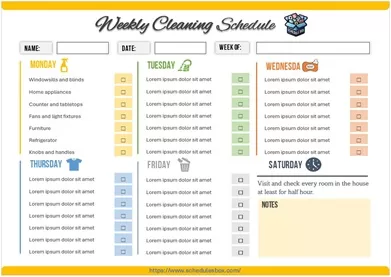
Weekly Cleaning Schedule Template

Weekly Cleaning Schedule Template


File Type: MS Word (ZIP File)
File Size: 131 KB

Download Now

School Cleaning Schedule Template

School Cleaning Schedule Template


File Type: MS Word (ZIP File)
File Size: 971 KB

Download Now

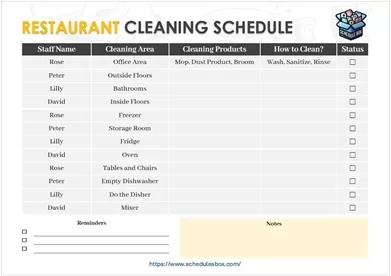
Restaurant

Restaurant Cleaning Schedule Template


File Type: MS Word (ZIP File)
File Size: 738 KB

Download Now

Types of Cleaning Schedule Templates

As a beginner, here you will get to know the major types of the cleaning schedule template:

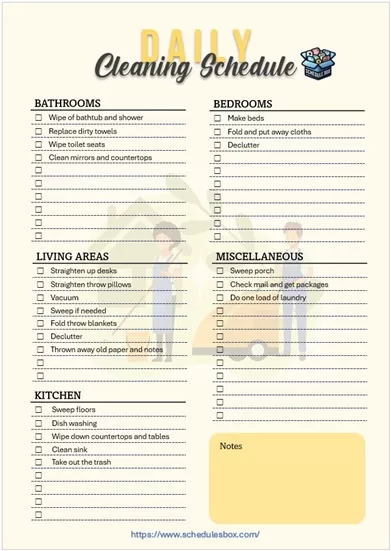
Daily Cleaning Schedule

If it is the office or home, this type of cleaning schedule defines the quick daily cleaning task to perform. At the workplace, you can break the cleaning tasks into three categories, such as office and reception, kitchen, and bathroom. Further, you can assign tasks like disposing of the garbage, emptying the bin, refilling the essentials for the bathroom, mopping kitchen floors, etc. However, at home, you can divide cleaning chores among the family members, like making the bed, sweeping kitchen floors, and loading and unloading the dishwasher. So that is how you can create a list of daily cleaning activities for improved work and hygienic conditions.

Weekly Cleaning Schedule

In this format, you can craft a more thorough list of cleaning tasks to be done within a week. After assigning specific cleaning activities for a week, you can keep track of the performance and adjust it according to what best suits your needs. Some examples include disinfecting door handles and lift buttons along with mopping hard floors. In this manner, you can not only build the confidence of the staff but also increase the customer satisfaction level by keeping office premises clean.

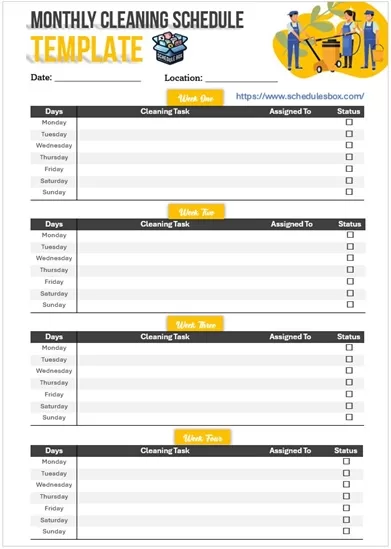
Monthly Cleaning Schedule

Unlike other monthly cleaning schedules, these templates are prepared for deep cleaning purposes. Therefore, it does not include frequent cleaning activities. Dissecting activities into a monthly schedule helps business organizations and homes prevent clutter. With that, you feel more comfortable and protected with organized living and workspace.

Room-by-room Cleaning Schedule

This sort of cleaning schedule is particularly beneficial for homeowners. They can make the most of the template and set the roadmap for drafting a list of unique cleaning tasks for each room. Once the tasks and subtasks are created, you can allocate these tasks to each family member and keep track of the activities, whether they are completed or not.

Customizable Cleaning Schedule

These templates are designed to fulfill needs and preferences. For instance, in the case of a party, celebration, or any event, you can make the best use of these tools for cleaning the house or office premises. You can add the cleaning activities that need time and designate them to the relevant individuals. However, with the customization feature, you can make changes to the schedule at any time and make it according to the circumstances.

Benefits of Using a Cleaning Schedule Template

Cleaning schedule templates offer so many benefits, as they help the business keep its staff consistent and organized. With a clean and tidy working environment, employees feel secure and remain healthy. Therefore, the chances of absenteeism are reduced by a great deal. Moreover, with task breakdown, it becomes easy for the cleaning staff to complete the cleaning chores in a timely fashion without spending hours. In addition, regular cleaning activities prevent dust and dirt from piling up. In this way, you feel less stressed.

Common Challenges to Prevent

Creating a schedule for cleaning members requires careful attention because filling your cleaning and sanitation schedules with so many tasks can overload them and cause great disruption and delays. Another essential thing to remember while creating a cleaning task list is to be realistic with time estimation and avoid under- or overtime allocation to each cleaning activity. People also face deep cleaning challenges, but with this template, you can not only remember a specific day and time for deep cleaning but also mention activities for better tracking.

How to Create a Cleaning Schedule Template

Creating a cleaning schedule template helps people organize cleaning tasks in a simple and effective way. The first step involves making a complete list of all cleaning activities for the home, office, or workplace. People can include tasks such as dusting, vacuuming, mopping floors, sanitizing surfaces, washing dishes, and taking out trash. After listing tasks, people should set priorities according to importance and frequency. Daily tasks usually include basic cleaning, while deep cleaning tasks may only require weekly or monthly attention. The next step involves dividing work among family members, employees, or cleaning teams to reduce workload and improve responsibility. People should also choose suitable cleaning days and assign realistic time limits for each task. A proper cleaning schedule creates balance, saves time, and helps people maintain cleanliness without stress or confusion.

Daily, Weekly, and Monthly Cleaning Examples

Daily, weekly, and monthly cleaning routines help people maintain clean and organized spaces regularly. Daily cleaning tasks usually include making beds, wiping kitchen counters, washing dishes, sweeping floors, and taking out garbage. These tasks prevent dirt and clutter from building up quickly. Weekly cleaning activities often include vacuuming carpets, mopping floors, cleaning bathrooms, changing bed sheets, and dusting furniture. Weekly cleaning helps maintain hygiene and keeps living or working spaces fresh. Monthly cleaning tasks focus on deeper cleaning activities such as washing windows, cleaning fans, organizing storage spaces, sanitizing appliances, and deep cleaning carpets or furniture. Some people also include seasonal cleaning for garages, outdoor spaces, and closets. Organizing tasks into daily, weekly, and monthly categories helps people manage cleaning routines more effectively and prevents overwhelming workloads.

Tips for Following a Cleaning Schedule

People can follow a cleaning schedule more easily by using simple and practical habits. Setting reminders on phones, calendars, or planners helps people remember important tasks and stay consistent with cleaning routines. Keeping cleaning supplies ready and organized also saves time and makes cleaning more convenient. Many people feel motivated when they start with small and simple tasks before moving to larger cleaning jobs. Families and workplaces can also involve everyone in cleaning activities to reduce pressure on one person. Creating realistic schedules with manageable tasks helps people avoid stress and maintain consistency. People should also review and update their schedules whenever routines or responsibilities change. Regular habits and teamwork help people follow cleaning schedules successfully and maintain clean environments every day.

Office Cleaning Schedule Template

Office Cleaning Schedule Template


File Type: MS Word (ZIP File)
File Size: 150 KB

Download Now

Monthly Cleaning Schedule Template

Monthly Cleaning Schedule Template


File Type: MS Word (ZIP File)
File Size: 01 MB

Download Now

Daily Cleaning Schedule Template

Daily Cleaning Schedule Template


File Type: MS Word (ZIP File)
File Size: 01 MB

Download Now

Common Mistakes to Avoid

Many people make mistakes that reduce the effectiveness of their cleaning schedules. One common mistake involves creating unrealistic schedules with too many tasks in one day. This approach often causes stress and discouragement. Some people also skip important cleaning tasks because they underestimate their importance or forget to include them in the schedule. Lack of consistency creates another problem because irregular cleaning allows dirt and clutter to build up quickly. Some individuals fail to divide responsibilities properly, which increases workload for one person and creates frustration. Others ignore deep cleaning tasks and only focus on visible areas. Poor time management can also make cleaning feel difficult and overwhelming. People can avoid these mistakes by creating balanced schedules, assigning clear responsibilities, and maintaining regular cleaning habits.

Tools and Supplies for Cleaning

Cleaning tools and supplies help people complete cleaning tasks quickly and effectively. Common cleaning tools include brooms, mops, vacuum cleaners, dusters, scrub brushes, and microfiber cloths. These tools help remove dirt, dust, and stains from different surfaces. People also use disinfectants, glass cleaners, floor cleaners, soaps, and sanitizing sprays to maintain hygiene and kill germs. Gloves protect hands from harsh chemicals and dirt during cleaning activities. Trash bags and storage containers help people manage waste and organize spaces properly. Some people also use buckets, sponges, and paper towels for specific cleaning tasks. Choosing the right tools and supplies improves cleaning quality, saves time, and creates healthier environments in homes and workplaces.

Cleaning Schedule for Different Places

Different places require different cleaning schedules because each environment has unique cleaning needs. Homes usually need daily kitchen and bathroom cleaning, along with regular dusting, laundry, and floor cleaning. Offices require organized schedules for desks, meeting rooms, washrooms, and shared spaces to maintain professional and hygienic environments. Schools need regular classroom cleaning, desk sanitizing, restroom maintenance, and playground cleaning to protect students and staff from germs. Hospitals require strict and detailed cleaning schedules because healthcare environments demand high levels of hygiene and sanitation. Restaurants also follow strict cleaning routines for kitchens, dining areas, utensils, and food preparation spaces to maintain food safety standards. Apartments and residential buildings often require cleaning schedules for hallways, elevators, parking areas, and shared facilities. Customized schedules help each place maintain cleanliness according to its specific needs.

Digital and Printable Cleaning Templates

Many people use digital and printable cleaning templates to organize cleaning tasks more efficiently. Printable templates allow people to hang schedules on walls, refrigerators, or notice boards for easy access and daily reminders. These templates often include task lists, dates, responsibilities, and completion checkboxes. Digital templates provide additional convenience because people can use mobile apps, spreadsheets, calendars, and planners to manage cleaning activities. Digital schedules also allow users to set reminders, update tasks quickly, and share responsibilities with family members or coworkers. Some apps even track progress and send notifications for upcoming tasks. Both printable and digital templates help people stay organized, save time, and maintain regular cleaning habits more effectively.

Conclusion

A cleaning schedule template helps people maintain clean, organized, and healthy environments in homes, offices, schools, restaurants, and many other places. Proper schedules divide tasks clearly, improve time management, and reduce stress by creating structured cleaning routines. Daily, weekly, and monthly plans help people manage responsibilities without confusion or overload. Cleaning schedules also encourage teamwork, accountability, and consistency among family members and employees. When people use proper tools, follow realistic routines, and avoid common mistakes, they can maintain cleanliness more effectively. Digital and printable templates make cleaning management even easier by helping people track tasks and stay organized. A well-planned cleaning schedule improves comfort, hygiene, productivity, and overall quality of life.

Leave a Reply

Your email address will not be published. Required fields are marked *