Scheduling is an inevitable part of planning and when it comes to construction projects no one can ignore the significance of a well-organized schedule to put in place for optimal results. Right from listing the task, project deliverables, milestones, and deadlines, it needs careful planning and scheduling. Without it, things can take a quick turn and go out of hand by increasing the construction project’s overall cost. That is why most project managers prefer using construction schedule templates to break down the whole project and its scope into small pieces to meet deadlines and share it with the concerned parties.
Construction projects need good planning to finish on time and within budget. A construction schedule template helps builders, contractors, and project managers organize all tasks in a clear way. It shows what work needs to be done, when it should start, and when it should finish. Using a schedule template makes construction work easier to manage and reduces delays.
Templates are Crucial in Construction Projects
For construction workflow management using schedule templates plays a crucial role. They make the whole process simple and achievable by jotting down each activity, and how many resources are needed to complete each task and subtask. In addition to that, schedule templates provide you with a quick overview of the starting and ending times of the project to make timely adjustments.
One major reason templates are crucial is that they save time. Instead of creating documents from the beginning every time, project managers can use ready-made formats for schedules, reports, invoices, and checklists. This allows the team to focus more on actual construction work rather than paperwork.
Templates also improve accuracy and consistency. In construction projects, even small mistakes can lead to delays or extra costs. Standard templates ensure that important details are not missed. Every document follows the same structure, making it easier to review and understand.
Templates are also useful for project tracking and monitoring. Managers can compare planned work with actual progress and quickly identify delays or problems. This helps in making faster decisions and keeping the project on schedule.
Financial management becomes easier with templates as well. Budget templates, expense sheets, and payment tracking forms help control project costs. They provide a clear record of spending and reduce the chances of financial confusion.
Safety is another important area where templates are valuable. Construction sites can be dangerous if safety rules are ignored. Safety checklist templates help ensure that workers follow proper procedures and use protective equipment correctly.
Digital templates have become even more popular in modern construction projects. Software tools allow teams to update documents instantly and share them with others in real time. This improves efficiency and keeps everyone informed about project progress.
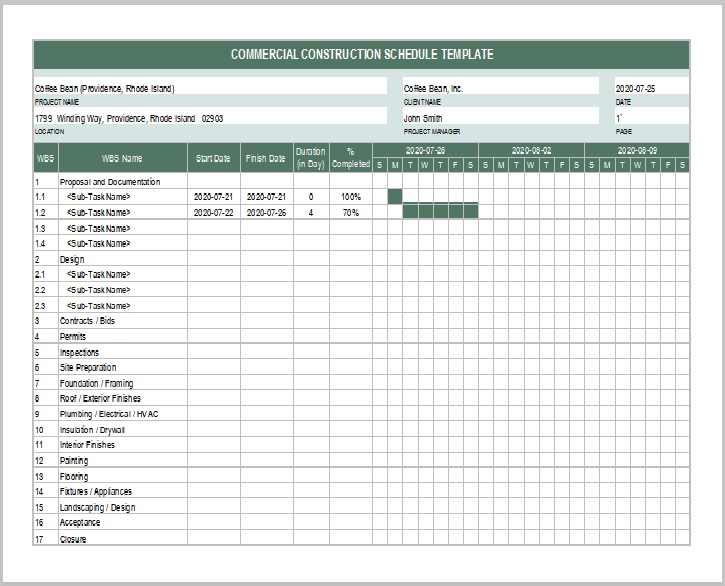
Commercial Construction Schedule Template
File Size: 45 KB
Commercial Construction Schedule Template
File Size: 29 KB
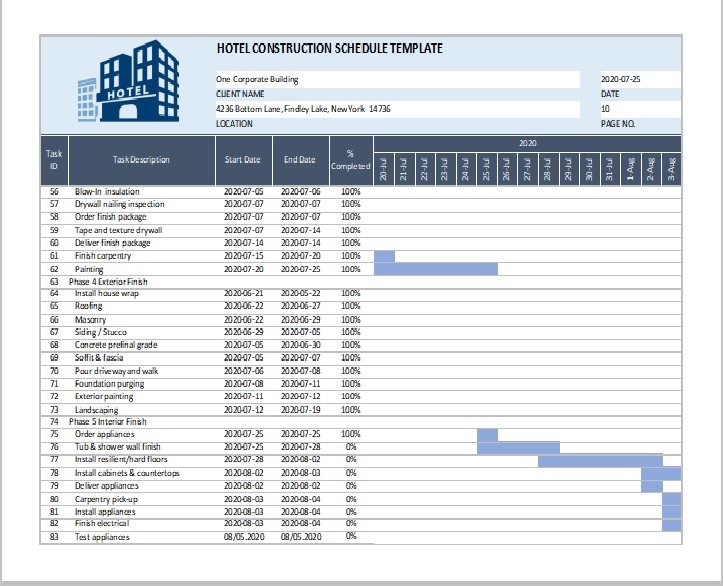
Key Elements of Construction Schedule Templates
These construction planning tools incorporate plenty of key elements that play significant roles in successfully setting project timelines and accomplishing them with success.
Visual Display
Using construction schedule templates provides you with a comprehensive overview of the project at a glance. That is how, being a project manager, you can easily track and pinpoint the areas that are lacking behind from timeline and make a timely decision to avoid unnecessary delays in the project deliverables.
Reporting Tool
These printable schedule templates include the feature of a complete reporting model. Instead of taking lots of files and documents Project managers can make the most of these construction project tools to list down all the pertinent aspects of the project in one place right from beginning to end to give a comprehensive presentation to the project stakeholders.
Mitigating Risks
Scheduling the construction project assists the project manager in countering errors and unwanted delays. With a clear picture of the work breakdown structure one can mitigate the risk of project budget overrun by excess use of material consumption and human resources. That is how managers can mitigate the risks and accomplish success in each construction project phase with great customer satisfaction.
Free Construction Schedule Templates
Creating a project schedule from scratch takes a lot of time and energy. However, taking assistance in crafting a thorough schedule costs you hard-earned money. Therefore, free construction schedule templates come into play. These free resources are conveniently available online and to avoid putting stress on your project budget you can download and use them straightaway to streamline your construction project by following the pre-designed guidelines to draft a well-versed project document.
Here are previews and download links for these Free Construction Schedule Templates in MS Word and MS Excel format.
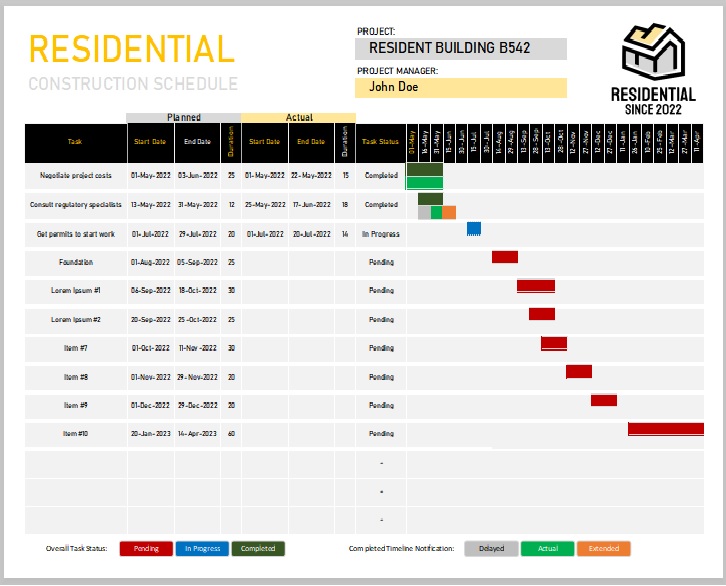
Residential Construction Schedule Template
File Size: 76 KB
Residential Construction Schedule Template
File Size: 51 KB
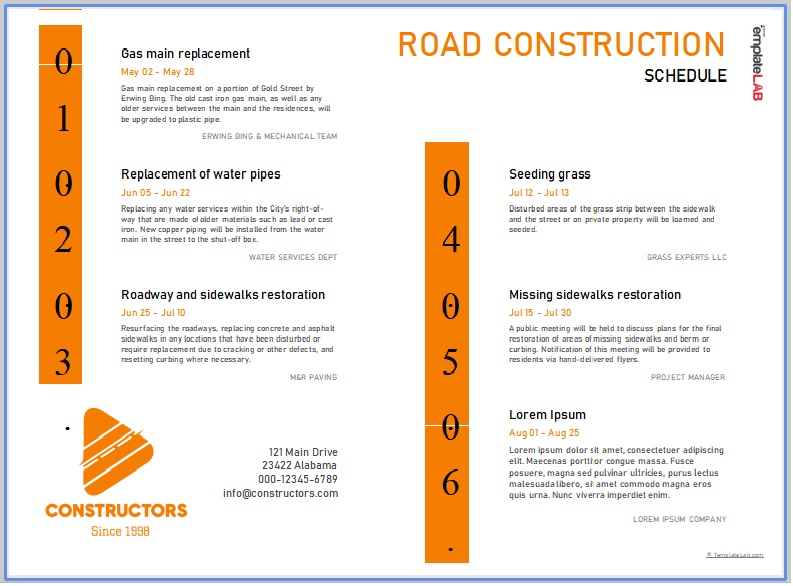
Types of Construction Schedules
There are several types of construction schedules, each tailored to different project requirements and phases. The main types include:
Master Construction Schedule:
A master construction schedule acts as the central plan for the whole construction project. Project managers use it to organize all activities from the beginning of the project until final completion. It includes important tasks such as site preparation, foundation work, structural construction, electrical and plumbing installation, finishing work, inspections, and handover. The schedule clearly shows start dates, finish dates, project phases, key milestones, and task durations. Team members use this schedule to understand their responsibilities and complete work on time. Contractors, engineers, suppliers, and clients can also review the schedule to stay informed about project progress.
Phase Schedule:
A phase schedule focuses on one specific stage of a construction project, such as excavation, foundation work, structural framing, roofing, electrical installation, plumbing, or finishing work. Project managers divide each phase into smaller and manageable tasks so workers can complete activities in an organized sequence. This schedule helps supervisors assign labor, equipment, and materials according to the needs of that particular phase. Team members use the phase schedule to understand daily responsibilities, task priorities, and completion deadlines. It also improves coordination between different crews working on the same stage of the project. Managers can track progress more easily, solve problems quickly, and prevent delays before they affect other phases of construction. A phase schedule also supports better quality control because teams can focus carefully on each activity during that stage. Construction companies often update phase schedules regularly to match site conditions and maintain smooth workflow throughout the project.
Short-Term Schedule:
A short-term schedule manages daily or weekly construction activities on the project site. Site supervisors and project managers prepare this schedule to organize immediate tasks and maintain smooth operations. It includes detailed information about daily work plans, worker assignments, equipment usage, material delivery, and task deadlines. Workers use the schedule to understand what work they need to complete within a specific time period. Supervisors monitor progress closely and make quick adjustments if unexpected problems appear on-site. This schedule improves communication between teams and helps avoid confusion during busy construction activities. It also supports better time management because managers can track completed work and plan upcoming tasks more effectively. Construction teams often update short-term schedules regularly to match current site conditions and maintain continuous project progress.
Look-Ahead Schedule:
A look-ahead schedule helps construction teams plan upcoming activities for the next two to six weeks. Project managers use this schedule to prepare future tasks before work begins on-site. It includes information about upcoming construction activities, labor needs, equipment availability, material deliveries, and task deadlines. Teams review the schedule regularly to identify possible delays, resource shortages, weather challenges, or coordination problems early. This planning allows managers to take quick action and prevent disruptions in the construction process. A look-ahead schedule also improves communication between contractors, suppliers, engineers, and site supervisors because everyone understands the upcoming work requirements. It supports smooth workflow, better resource management, and continuous project progress by ensuring that teams stay ready for future construction activities.
Bar Chart (Gantt Chart) Schedule:
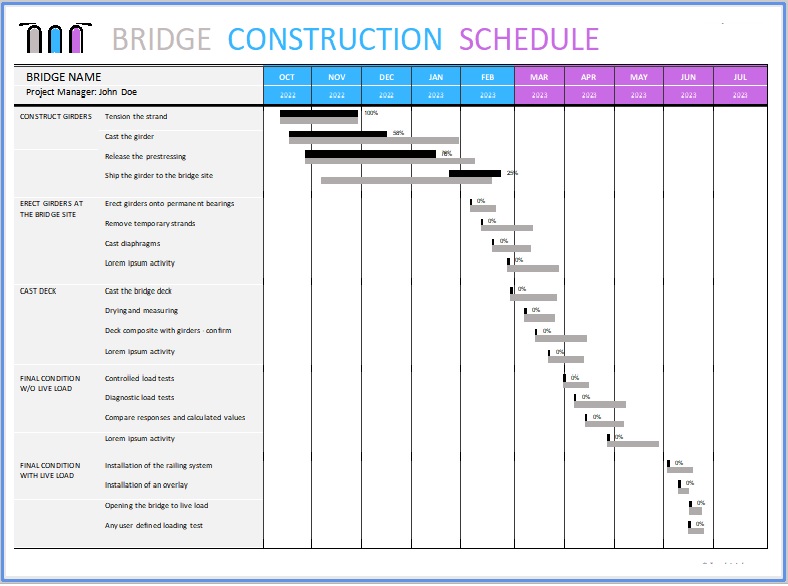
A bar chart or Gantt chart schedule is a simple and visual tool used to plan and track construction activities. It shows project tasks as horizontal bars placed along a timeline, allowing managers and workers to see when each activity starts and finishes. The length of each bar represents the duration of the task, making it easy to understand the time required for different activities. Project teams use this schedule to identify task sequences, overlapping work, and important deadlines. It also helps supervisors monitor project progress and compare planned work with actual performance. A bar chart schedule improves coordination between different teams because everyone can clearly view ongoing and upcoming activities. Construction managers often use software programs such as Microsoft Project or Excel to create and update Gantt charts quickly. This scheduling method supports better planning, time management, and project control throughout the construction process.
Critical Path Method (CPM) Schedule:
The Critical Path Method (CPM) schedule is an advanced planning technique that helps construction managers identify the most important activities in a project. It shows the exact sequence of tasks that directly affects the project completion date. Managers calculate the time required for each activity and connect tasks according to their dependencies. The longest sequence of essential activities forms the “critical path.” If any task on this path gets delayed, the entire construction project may also face delays. Project managers use CPM schedules to monitor high-priority tasks, control project timelines, and improve decision-making during construction. This method also helps teams plan labor, equipment, and materials more efficiently. By using CPM schedules, construction companies can reduce delays, improve coordination, manage risks, and complete projects within the planned time frame.
Program Evaluation and Review Technique (PERT) Schedule:
A PERT schedule helps construction teams plan projects where activity durations remain uncertain or difficult to predict. Project managers use this method to estimate the minimum, maximum, and most likely time required for each task. These time estimates help managers calculate expected project completion dates more accurately. A PERT schedule also shows the relationship between different construction activities and helps teams understand how delays in one task may affect other tasks. Managers use this scheduling method in large and complex construction projects where weather conditions, labor availability, material supply, or technical issues may change project timelines. The PERT method supports better decision-making, improves risk management, and helps construction teams prepare for unexpected challenges before they affect overall project progress.

Advantages of Using Construction Schedule Templates
Construction project schedule templates have plenty of advantages and here are some of the key advantages:
Staying Organized
One of the key advantages of using printable construction schedule templates is that they help keep the entire team well organized. Project managers and all team members can clearly see what tasks need to be completed and when they are due. This clear structure removes confusion and helps everyone stay focused on their responsibilities. It also improves awareness because each person knows their role in the project timeline and how their work affects others.
These templates also help teams stay alert and responsible throughout the project. Since deadlines are clearly mentioned, workers remain more focused on completing tasks on time. Managers can easily monitor progress and guide the team when needed to maintain performance. In this way, printable templates support better coordination, improve discipline at the site, and help the whole team work together effectively to achieve project goals successfully.
Track Progress
With the help of these templates, project managers can easily track the progress of every task and subtask in a construction project. They can see what work is completed, what is in progress, and what is still pending. This clear overview helps them monitor performance more effectively and stay updated at all times. If any task falls behind schedule, managers can quickly identify the delay and take action. They can also decide whether extra workers, materials, or equipment are needed to complete the work on time. This timely decision-making helps avoid bigger problems later in the project. As a result, construction work stays organized, efficient, and aligned with the planned schedule.
Streamline Project Management
This construction schedule template simplifies the entire construction process by bringing all project information into one clear format. It helps project managers, engineers, contractors, and workers understand their assigned tasks without confusion. Everyone on the team knows what they need to do, when they need to do it, and how their work connects with other activities. This improves coordination and reduces misunderstandings on the construction site. The template also makes it easier to identify important project milestones, key deliverables, and strict deadlines. Managers can quickly track progress and see whether the project is moving according to plan. If any delay happens, they can take fast action to fix the issue. Overall, it creates a more organized workflow and keeps the construction project moving in a smooth and efficient way.
Time Efficient
Unlike traditional manual methods, using pre-made construction schedule templates helps save a lot of time and effort. Instead of creating documents from scratch, project managers can directly use ready-made formats and focus more on important construction activities. These templates already include a structured layout, so users do not need to design tables or planning formats again and again. They only need to fill in relevant project details such as task names, dates, deadlines, resources, and responsibilities. This makes the planning process faster, simpler, and more organized. It also reduces errors because the structure is already tested and clear. As a result, teams can spend more time on site management, problem-solving, and improving project progress instead of handling heavy paperwork.
Customization
Customization is one of the most important advantages of a construction schedule template. It allows users to modify the layout, design, and content according to their project requirements. Project managers can easily adjust tasks, timelines, colors, formats, and labels to match different types of construction work. For example, a small residential project may need a simple schedule, while a large commercial project may require a more detailed and complex format. Customization also helps meet the expectations of different stakeholders such as clients, engineers, contractors, and suppliers. Users can add or remove sections, highlight important milestones, and change the theme to improve clarity and presentation. This flexibility makes the template more practical and suitable for different construction environments. It also saves time because teams do not need to create new schedules from scratch for every project.
Accessibility
These free construction schedule templates are easily available on the internet. Project managers, contractors, and site supervisors can visit different printable template websites and download the formats that best fit their project needs. These templates come in many styles, such as daily schedules, weekly plans, Gantt charts, and detailed project timelines. Users can quickly open them in tools like Excel, Word, or project management software and start customizing them according to their work requirements. This easy access saves time and helps teams stay organized from the beginning of the project.

Pingback: Weekly Schedule Templates — Free Word & Excel Downloads