Staff schedule templates are simple device that help managers to plan when employees will work. They are used in many industries such as retail, healthcare, restaurants, and offices. A good schedule keeps everything organized and makes sure that there are enough workers at the right time. Without a proper schedule, businesses can face problems like understaffing, overworking employees, or confusion about shifts. That is why many companies rely on staff schedule templates to save time and avoid mistakes.
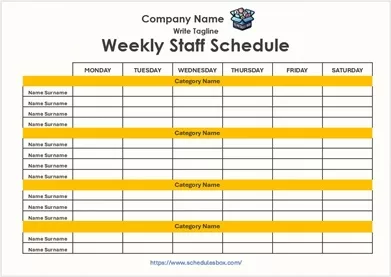
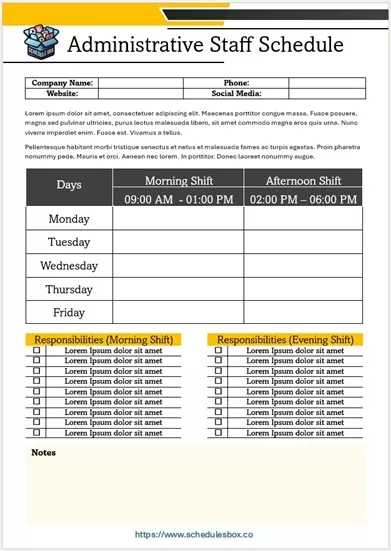
A staff schedule template is a pre-designed template where managers can fill in employee names, working hours and their shifts. The main purpose of using a template is to avoid starting from scratch every week. Instead of making a new schedule again and again, managers can reuse the same format and only update the details. This makes the process faster and more efficient, especially for businesses with many employees.
It is not easy to manage staff and their daily, weekly and monthly activities as well as working hours in a small, medium, or large-scale business. In order to cover all shifts properly, you need to devote much time and close attention. A newbie will not be able to identify with his or her staff schedule given a lack of any previous experience in doing so. As such, heavily structured staff schedule templates could be utilized and the potential exists for simplification minus tension.
Getting these templates is not as difficult as you may believe. A lot of options are available on the internet and it is by visiting these sites where you can look for staff schedules that suit you best in terms of templates. Moreover, some websites charge for downloaded templates despite being free.
Flexible Staff Schedules Designs
Authoring an employee shift schedule file can be difficult. However, the following ready-made templates can make it easier for you to plan the working hours of employees. These templates have good customization options. At any time, you want, insert new data into your list, change it, or print out its updated version.
Technology has made staff scheduling even easier. Many businesses now use digital tools and software to create and manage schedules. These tools can automatically assign shifts, send notifications to employees, and update schedules in real time. However, even with advanced tools, the basic idea of a schedule template remains the same. It is still about organizing work in a clear and simple way.
A well-designed staff schedule template should be easy to read and understand. It should include important details like employee names, dates, shift times, and roles. Using colors or symbols can make the schedule more visually clear. For example, different colors can be used for different shifts or departments. This makes it easier for employees to quickly find their information.


Key Components of Staff Schedule
Staff Names
The staff names section is one of the most important parts of any scheduling template because it provides a space where names for employees can be written specifically. With all the names in one location, locating and recognizing team members becomes simpler making it easier to track their assignments and shifts. This also eases off confusion particularly where there is more than one shift with many employees under control.
Role
The role field emphasizes the kind of job a worker does or his/her duties at work. Roles are clearly defined than tasks can be given based on each person’s skills and responsibilities. This helps the organization run smoothly. Managers, assistants, and specialists each have their own duties. When everyone knows their role, they can work together better, achieve goals more easily, and understand what needs to be completed by the end of the day.
Start Time
The start time field helps supervisors keep accurate records of what time each shift starts, as well as being useful when it comes to punctuality and responsibility. Keeping up with starting times also aids in planning shifts hence ensuring a smooth movement from one shift to another while at the same time making sure that the hours of work conform with the needs of the organization.
Last Time
Similarly, the last time column records how long (when) the work was over for each worker per day. That is why tracking working hours is important. It helps ensure employees are paid correctly, keeps attendance records clear, and makes sure no one is given too much work. That much is very important when it comes to observing labor laws since some may have set limits on how long (many hours) one should work continuously without a break.
Lunch Breaks
Lunch breaks are a highly important element of employee scheduling. Allotted pauses give workers the opportunity to relax, recharge, work efficiently, and maintain a good atmosphere. Giving employees regular breaks helps create a healthier and more positive workplace. These breaks reduce stress and help workers stay calm and focused. When employees feel relaxed as they can concentrate better and do their work more efficiently.
Working Hours
In the working hours section, we calculate the total hours spent on the job by each employee, incorporating any extra hours. For a fair payment to employees, tracking the actual hours worked is essential as it aligns with company policies and compliance requirements. This specific section is essential when it comes to dealing with overtime and modifying shifts depending on workload fluctuations.
The integration of these elements in a staff timetable can enable supervisors and managers to effectively track their workers in terms of hours worked, roles assumed, or break-off times. These well-organized systems will enhance more effective control of employees making sure they produce quality outcomes during projects’ execution which would normally correspond with sound motivational levels among the workforce.


Types of Staff Schedules
There are different types of staff schedule templates depending on the needs of a business. A daily schedule template is used for planning shifts for a single day. It is useful for businesses with changing daily needs, such as restaurants. A weekly schedule template is more common and helps plan shifts for an entire week. This is useful for most businesses because it gives a clear overview of the whole week. Monthly templates are used for long-term planning and are helpful for large organizations.
Some businesses also use rotating schedule templates. In this type, employees work different shifts in a fixed pattern. For example, a worker may have a morning shift one week and an evening shift the next. This ensures fairness and gives everyone a chance to work different hours. Another type is a fixed schedule template, where employees have the same shifts every week. This is easier to manage and works well for stable businesses.
Fixed Schedule
A fixed schedule is when employees work the same hours and days every week. For example, someone might work from 9 AM to 5 PM, Monday to Friday. This type of schedule is simple and easy to manage because everything stays the same. Employees like it because they can plan their personal life without surprises. However, it may not be suitable for businesses that have changing workloads or need flexibility.
Flexible Schedule
A flexible schedule allows employees to choose their working hours within certain limits. For example, they may decide when to start and end their day as long as they complete their required hours. This type of schedule is becoming popular because it supports work-life balance. Employees feel more comfortable and productive when they can work at times that suit them best. The managers need to make sure that work is still completed on time.
Rotating Schedule
A rotating schedule means employees work different shifts over a period of time. For example, one week they might work a morning shift, and the next week an evening or night shift. This type of schedule is often used in industries like healthcare or manufacturing where work continues 24/7. It helps distribute workload fairly among employees, but it can sometimes be tiring because workers need to adjust to changing hours.
Split Shift
A split shift is when an employee works two separate shifts in one day with a long break in between. For example, a worker may work in the morning, take a few hours off, and then return in the evening. This is common in industries like hospitality or transportation where demand is high at certain times of the day. While it helps businesses cover busy hours, it can be challenging for employees because their day is divided.
Compressed Workweek
In a compressed workweek, employees work longer hours each day but fewer days in a week. For example, instead of working five days for 8 hours, they may work four days for 10 hours. This gives employees an extra day off, which many people enjoy. It can improve job satisfaction and reduce commuting time. However, the longer working hours can sometimes be tiring.
On-Call Schedule
An on-call schedule means employees are available to work if needed, even if they are not actively working at that moment. For example, doctors or technicians may be on-call during nights or weekends. This type of schedule is important for handling emergencies or unexpected situations. While it ensures quick response times, it can be stressful for employees because they must always be ready to work.
Seasonal Schedule
A seasonal schedule is used when businesses need more workers during certain times of the year. For example, retail stores may hire extra staff during holidays or festivals. Employees may work more hours during busy seasons and fewer hours during slow periods. This helps businesses manage demand, but it may not provide stable income for workers.


Shift Work
Shift work involves dividing the day into different time periods, such as morning, evening, and night shifts. Employees are assigned to one of these shifts. This is common in industries that operate 24 hours a day, like hospitals or factories. Shift work ensures continuous operations, but working night shifts or irregular hours can affect health and sleep patterns.
Remote Work Schedule
A remote work schedule allows employees to work from home or any location instead of coming to the office. This type of schedule became more common with the rise of digital technology. Employees can often set their own working hours, making it flexible and convenient. It saves travel time and can increase productivity, but it requires strong communication and self-discipline.
Project-Based Schedule
A project-based schedule is focused on completing specific tasks or projects rather than fixed working hours. Employees work according to the needs of the project and deadlines. This type of schedule is common in industries like IT, design, and construction. It gives flexibility and focuses on results, but workloads can vary depending on the stage of the project.
Each type of staff schedule serves different operational needs and employee preferences, and choosing the right type depends on the nature of the work, the organization’s requirements, and the employees’ needs.
Tips to Create Staff Schedules
Creating a staff schedule template is not very difficult. First, you need to list all employees and their roles. Then, decide the working hours and number of shifts needed each day. After that, assign employees to shifts based on their availability and skills. You should also consider employee preferences when possible, as this can improve satisfaction and productivity. It’s crucial for shift workers’ organizations to have a well-arranged and healthy roster. Here are several crucial hints that will help you make a perfect work plan for your staff.
Be Thoughtful
Managers and supervisors must know individual employees in order to design staff schedules while considering employees’ strengths for the positions that they fit best.
Clear Communication
Inform all the workers about the timetable. Put it in their hands and forward by electronic mail or another appropriate system. This way, no one will dodge his/her duty split. Also, there should be a mechanism for staff to receive alerts in case of any sudden alterations to their work rota so that managers can be certain nobody will fail during shifts.
Planning Ahead
It is important to plan ahead so work can run smoothly and employees feel secure in their jobs. Good planning helps keep staff stable and avoids sudden problems. Talking with employees is also important because it helps understand their needs and availability. When managers communicate well and plan properly, they can create a better schedule that improves both efficiency and results.
So, staff scheduling is an ideal solution for supervisors to streamline the workflow and planning process for a balanced working hour distribution. Therefore, to bring organizations into your daily business operations, having a proper staff schedule template is inevitable. Staff schedule templates are essential tools for managing employees effectively. They save time, improve organization, and help businesses run smoothly. By using a clear and simple template, managers can avoid confusion and ensure that everyone knows their responsibilities. Whether created on paper or with digital tools, a good schedule is key to a productive and stress-free workplace.